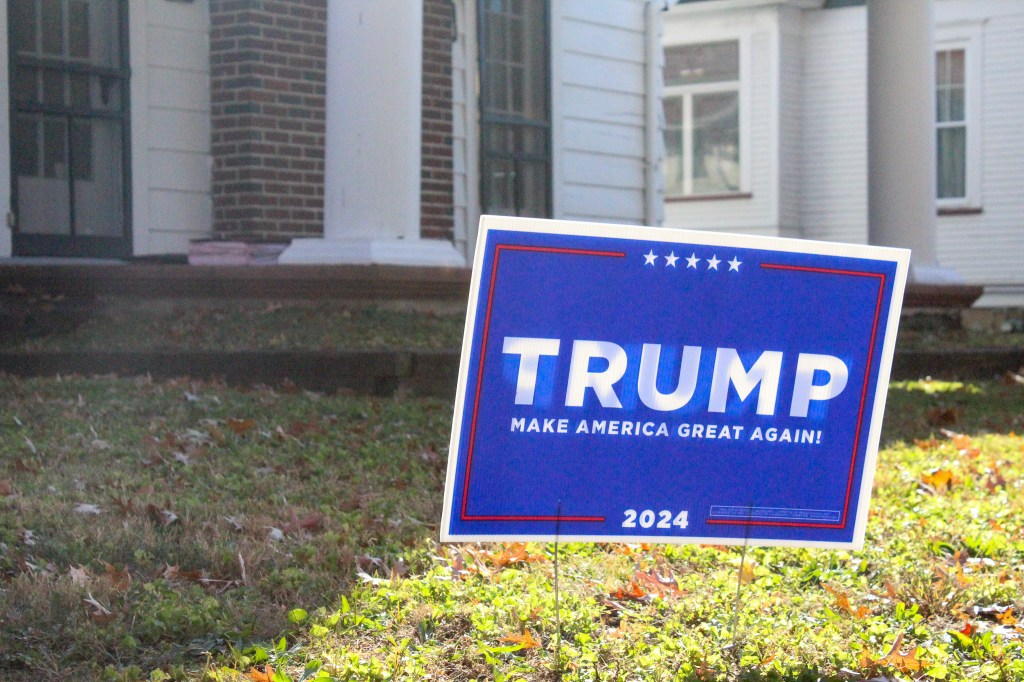
Some expect him to cut funding for wars abroad. Some want him to support the USA’s allies unconditionally. Some think he’s the lesser evil. Some believe his greatness will serve the nation. In Scranton, PA, they all voted for Trump.
Janet, a retired attorney from New York, opens the door in a t-shirt with H.P. Lovecraft’s octopus-like figure staring right at me. “Cthulhu for President: Why settle for the lesser evil?”, reads a text below.
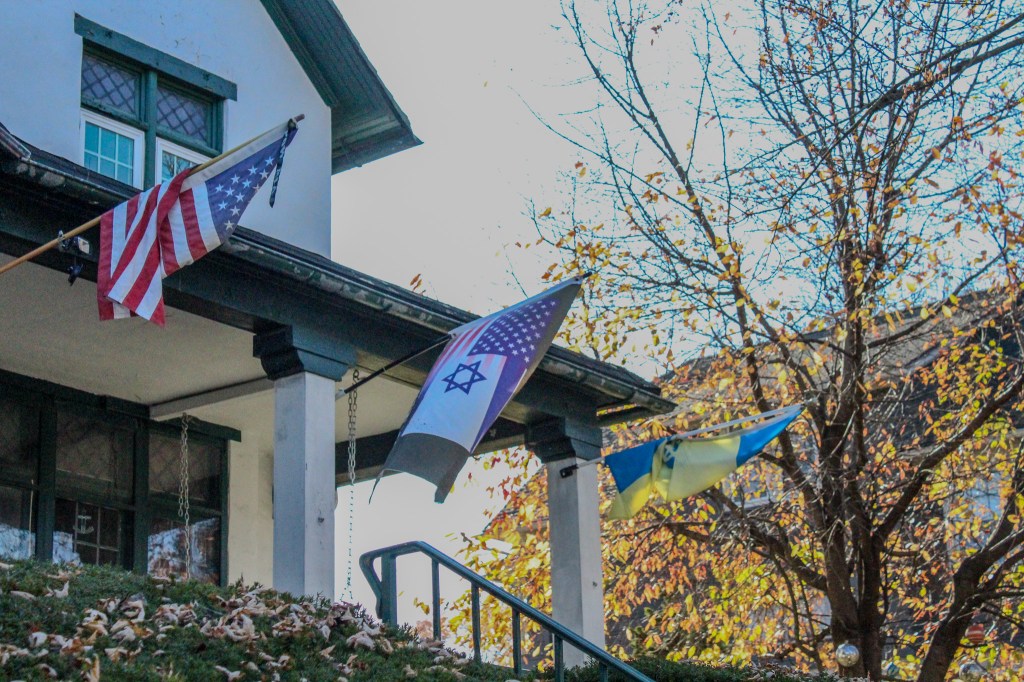
Her soft-spoken attitude stands in stark contrast with what she is wearing. Standing under three flags – an American, an Israeli and a Ukrainian one posted on the porch – she empathetically explains that the US must not abandon its allies.
She lives two doors down the road from the house where President Joe Biden was born and lived until the age of 10. On a street filled with Harris-Walz signs, she voted for Donald Trump.
Janet is one of the many Republicans whose vote will decide arguably the most important swing state in the 2024 presidential elections. But while they are united in supporting Trump, their reasons for supporting him contradict each other.
When I ask her about how she feels about his explosive statements about ending the war in Ukraine, she downplays the issue.
“He cannot and will not end it in one day,” she says.
“It’s a tactic you see a lot as an attorney. You go big, say all sorts of things, make all these threats and promises. Then you gradually take concessions and still end up with a lot.”
She also believes he is perfectly capable of tackling issues beyond foreign policy, such as migration. “I mean, if you come from the real estate business in New York, you have to think you are the best, right?”
A couple blocks away, students are having breakfast in the main building of Marywood University. Three girls in their late teens have all gone to the polls just an hour before. They feel a lot more critical about the choices they had.
“They are all garbage. I’mma just vote for myself,” exclaims one of them, who is studying to become a physician assistant.
She did, in fact, cast a ballot for a named candidate. She opted for Donald Trump, just like her friends did.
They say that it was a practical decision, choosing a lesser evil who talks more about their issues. “I just want a family and a house. At least he cares about what is happening with us,” says another girl, who studies marketing.
I question what her emphasis on the last word means. She brings me another example.
“You know, we are sending all this money to Ukraine, and when the hurricane hit Florida, we had nothing to give. I just think if we are electing them, they should focus on us.”
At Scranton High School, the designated polling station for downtown Scranton, Republicans also seem to find conflicting reasons for supporting Donald Trump.
Ed Walsh, a military veteran, argues that Trump is the man of the moment. “We are on the brink of a civil war,” he says, emphasizing that he is most suited for tackling the immediate issue of polarisation. He believes in the unifying messages of the former president, rather than his divisive attitudes. He also believes that the US should not engage in wars abroad – yet he is not critical of support for Israel.
On the other hand, Cody, a student at Lackawanna College who just voted for the first time in his life, thinks beyond the immediate future. “Only Trump’s policies have a vision for the long run”, he argues. He thinks what matters is putting the US on the right track, and it’s his economic ideas that can pave the way.
Selective perceptions
While both President Trump and Vice President Harris try to appeal to a large voting base, chipping into their opponent’s camp, there is a stark contrast between the ways in which their messages mobilise people.
For Kamala Harris, the reasons are quite straightforward. According to Robert Y. Shapiro, professor and former chair of the Department of Political Science at Columbia University, she appeals both to the progressive and the mainstream parts of the Democratic party, and expands her base by playing to anti-Trump sentiment.
The Trump vote is harder to decipher. Sure, you have the core MAGA base, he says, referring to an unshakable mass of people who rally behind him for, not despite his incendiary politics.
Then there is the rest – those who hate the Democrats and those who are essentially looking for change, especially in the working class, Black and Latino communities.
“These groups perceive what they want to perceive”, says Shapiro.
“Let’s say, Trump wants to settle the war in Ukraine. It can mean whatever you want based on your beliefs.”
The noise Donald Trump creates indeed makes a case for selective hearing. For Janet, it is completely reasonable that bashing Zelenskyy is just part of his machismo. The young voters can perfectly see the solution for the future in him, as well as someone to just put an end to this electoral cycle – if that is what matters to them. His use of collective narratives can surely overshadow the blatantly polarising language, if a military veteran is disappointed about the disunity of the country he fought for.
“But the bottom line is, people are trying to rationalise a gut feeling of voting against the Democrats” – concludes Shapiro.
 Iván L. Nagy
Leave a comment